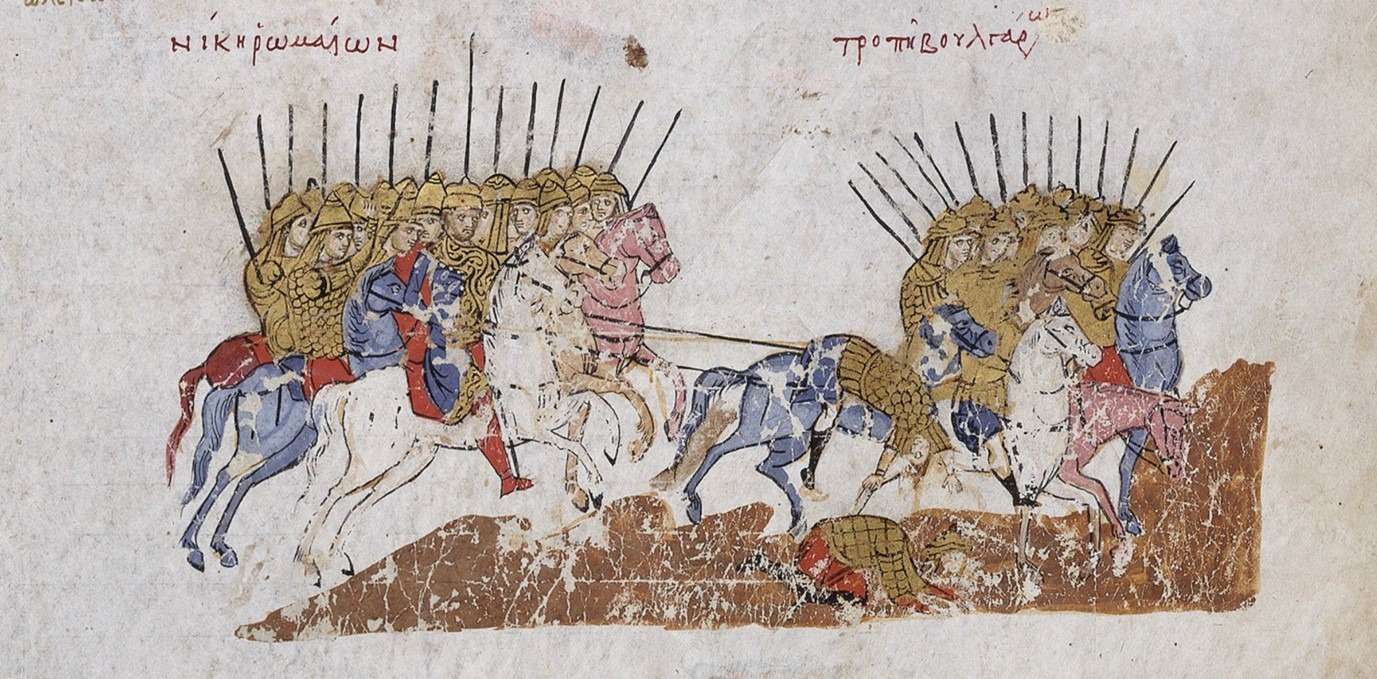
Since 680, the First Bulgarian Empire was a significant political entity in the Balkans, challenging even the Roman Empire for power. After its “Golden Age” under tsar Symeon (893–927), and relative peace under his son Peter (927–969), in 971 Bulgarian ruler Boris II (969–971/977) was forced to abdicate, and was held captive in Constantinople by the Roman emperor John Tzimisces, preceded by years of animosities (969–976) (for more details see Stephenson 2004, 51–53). The abdication of Boris II gave the Roman Empire control over former Bulgarian lands between the Danube and the Heamus Mountains, and between Iskar river and the Black Sea (Madgearu 2013, 37; cf. Krsmanović 2008, 144; Holmes 2002, 95f.). Lower Danube was possibly organized into another one of Roman administrative units. These administrative units were named themes. Some independent fragments of Bulgarian territories remained in the region of today’s Northern Macedonia (Hussey 1950, 71; Stephenson 2004, 55–58; Madgearu 2013, 30f., 37; Litavrin 1987, 202–205).
With Tzimiskes’ death in 976, the ensuing civil war demanded the attention of the new emperor Basil II (976–1025). This left him with little time to be dedicated to the Balkans. Basil II’s absence was used by four sons of a regional governor (κóμης) in Macedonia to assert their power. They are known as the Cometopuli, and their father is usually taken to have been of Bulgarian, but also possible Armenian origin (Seibt 1975, 65–100). Two of the brothers, David and Moses, died early. The third brother, Aaron, was killed by his fourth remaining brother, Samuil (997 – 1014). Simultaneously, the previous Bulgarian ruler Boris II, and his brother Roman (977–991/997) managed to flee Constantinople. Unfortunately, Boris II was accidentally killed by the Bulgarians on their flight back; Roman did join the Cometopuli uprising and was acclaimed as Tsar (Stephenson 2004, 58f.). Despite this, Samuil held most of the power, and had based himself around Prespa, Ochrid, Bitola, Hagios Germanos and Setina; in 985/986 he expanded the Bulgarian territory to Larissa, and in 986 he took Serdica (Popović 2016, 3–5). Lack of evidence of Roman presence in Preslav from 986 suggests Samuil took the city in that year (Madgearu 2013, 47; see also Frankopan 2001, 89). Roman emperor Basil II did try using Philippoupolis which was still in Roman hands as a base for his Balkan campaign (Wassiliou-Seibt 2017, 165). However, his attempt to capture Serdica in 986 was more than unsuccessful – on his retreat, the Roman army was massacred by Samuil at Trajan’s Gates (Stephenson 2004, 59).
With the trouble in the Balkans, and well as the ongoing civil war, in 988 Basil sought help in ending the civil war in the Roman Empire from Rus’ ruler Vladimir the Great (980–1015) – he promised Vladimir his sister’s hand in marriage. Anna porphyrogenneta (born in the purple chamber of the imperial palace) was married to the Grand Prince in exchange for Cherson, Christianisation of the Rus’ and military assistance of Rus’ troops (Varangian Guard) (Madgearu 2013, 45f.; Stephenson 2004, 60; Threadgold 1997, 517). As Basil was preoccupied with the power struggles for the throne, Samuil managed to capture Preslav, Pliska, Beroia and Serbia by 989 (Popović 2016, 5). Basil’s march into Macedonia in 991 resulted in taking Roman captive, but in the following year, the emperor had to yet again dedicate his attention to the Eastern border. This left Samuil free to raid the area up to Isthmus and Corinth, and secure his possession of Dyrrachium through marriage, so that by 997 he was in possession of most of the Bulgarian territories once under Symeon – Macedonia, territories between Danube and the Haemus mountains, Thessaly, Epirus, Rascia, and Diocleia and parts of Albania. With the death of Roman, Samuil consolidated these conquests by crowning himself tsar of Bulgaria in 997 (Stephenson 2004, 58–61; Madgearu 2013, 45–47; Runciman 1930, 220–232; Ostrogorsky 1968, 301–308; Threadgold 1997, 517). In 998 Samuil also raided Dalmatia, possibly in favour of Krešimir III Trpimirović, and his brother Gojislav I. The two brothers rebelled against their third brother, who was a Roman ally and the ruler of the Kingdom of Croatia, Svetoslav Suronja (996/997–1000). Samuil conquered lands as far north as Zadar, where he laid siege to the city, until he was forced to withdraw (for details see Budak 2018; Klaić 1975).
Basil II renewed his efforts to subdue Samuil’s rebellion in the year 1000 – by 1001 he captured towns along the Danube (Preslav, Preslavitza, Pliska, Dristra), Serbia, Thessaly and Beroia. Vidin followed in 1002, Serdica, Veria, Vodena and Skopje in 1004 and Dyrrachium in 1005. Samuil’s territory was now limited to the northern parts of Macedonia, and the Danube region near Srem. Narrative sources are silent on the years leading up to 1014, when Basil entered the Strumitsa valley, and engaged Samuil at the battle of Kleidion. Basil obliterated Samuil’s forces, allegedly blinding some fifteen thousand Bulgarian soldiers, earning him the nickname Βουλγαροκτόνος – the Bulgar Slayer. Samuil suffered a heart attack upon seeing his army return crippled to Prespa, and died soon afterwards. Samuil’s son, Gavril Radomir (1014–1015) fought on for a year, until he was murdered by his cousin, Ivan Vladislav (1015–1018), on the behest of the Roman Emperor. In 1018, after the death of Ivan Vladislav at Dyrrachion, Basil II had marched against Ochrid and took the remnant of the Bulgarian Empire (Madgearu 2013, 55; Popović 2016, 6; Threadgold 1997, 527f.; cf. Wassiliou-Seibt 2017, 177, 182; Runciman 1930, 252). The Bulgarian nobility capitulated and was integrated into the Roman administration through titles and offices awarded to them (Threadgold 1997, 527f.; Božilov, Gjuzelev 1999, 342). Basil paraded the Bulgarian empress and the patriarch of Bulgaria through Constantinople, demonstrating the subjugation of the Bulgarian Empire (Božilov, Gjuzelev 1999, 342). He did levy the taxes in kind, rather than cash, according to the Bulgarian practice, and in 1018–1020 he reestablished the autocephalous archbishop of Bulgaria with a seat in Ochrid (Stephenson 2004, 63–78; Threadgold 1997, 526f.; Curta 2006 281f.; Runciman 1930, 232–252; Ostrogorsky 1968, 309–311; Božilov, Gjuzelev 1999, 343; Meinrad. 2006).
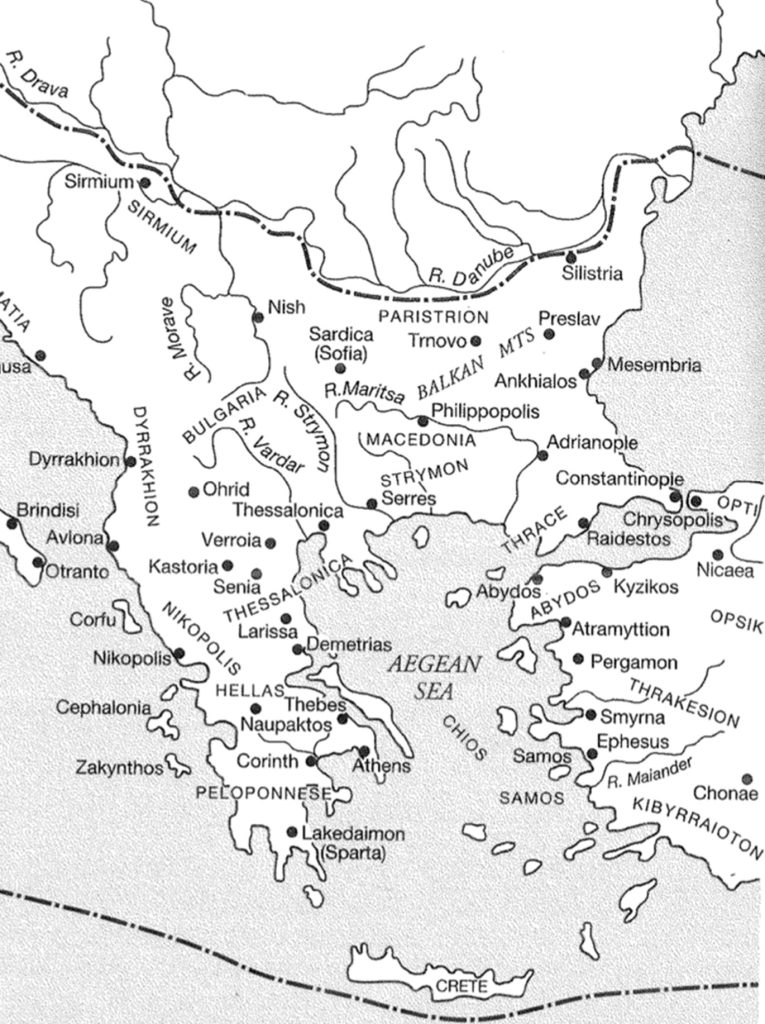
The debate in the historiographical circles concerning Bulgarian lands under Roman Empire revolves around attempts to determine whether these were at first incorporated into one theme, or whether they were split into several of these administrative units. Some historians postulate the existence of a composite theme of Bulgaria and Sirmium in 1020s, as well as mid-eleventh century composite theme of Bulgaria-Solun-Serbia (Božilov, Gjuzelev 1999, 343–350; Maksimović 1997, 32; for composite themes in general, see Krsmanović 2008, and Krsmanović 2009). Alternatively, after 1018, former Bulgarian lands were divided into Sirmium, Dalmatia, katepanate of Paradounavon, katepanate of Bulgaria, and duchy of Dyrrachium (Ostrogorsky 1968, 312f.) Third possibility would be the existence of a single theme of Bulgaria in 1018, with the center in Skopje, including all former Bulgarian territories (Stephenson 2004, 80; Madgearu 2013, 55; Krsmanović 2008, 191f.). Theme of Sirmium was possibly created in 1019 west of Vidin (for details see Madgearu 2013, 43), including former Bulgarian towns of Belgrade and Braničevo, and therefore the northwest of the former Bulgarian Empire (Madgearu 2013, 56; for more detail on the themes of Serbia and/or Sirmium, see Wassiliou-Seibt 2017, 184, 190; Litavrin 1987, 196). Paradounavon and Dyrrachion were most likely only separated from the theme of Bulgaria in 1037 and 1042 respectively, in order to simplify the defence of the border against the Pechenegs and Diokleia (Wassiliou-Seibt 2017, 190; Krsmanović 2008, 196). Two of the largest former Bulgarian territories were in any case the theme of Bulgaria, serving as protection of the themes of Thrace and Greece (Threadgold 1997, 539), and Paradounavon, serving as a buffer zone in the Danubian frontier. Theme of Bulgaria was probably established in 1018, although, as stated above, its territorial scope remains disputed (for details, see Kühn 1991, 227; cf. Stephenson 2004, 78, Nesbitt, Oikonomides 1991, 93; Jordanov 2003a, 73). By 1060, command over Bulgaria was split into a civilian and military one, headed by a praetor and a doux respectively (Stephenson 2004, 115, 137; Curta 2006, 285; Mihajlovski 2016, 266; See also Stephenson 2004, 136f.). Although a doux of Skopje is mentioned in 1193, the theme of Bulgaria seems to have existed until the establishment of the Second Bulgarian Empire (1185–1396) (Kühn 1991, 228).
Paradounavon existed as a katepanate most likely from 1043, previously having been a part of the theme of Bulgaria (Jordanov 2003a, 73; Jordanov 2003, 136), until 1091–1095 (Wassiliou-Seibt 2013, 181; Wassiliou-Seibt 2017, 179), when it lost most of its importance (Божилов, Гюзелев 1999, 354). The debates on this administrative unit are concerned with the date of its establishment, ranging from 971 to 1050s (Jordanov 2003a, 72; Božilov 2008, 92; Wassiliou-Seibt 2013, 181; Kühn 1991, 167, 224; Madgearu 2013, 63). Its borders were marked by Danube and the Balkan Mountains, the Black Sea and probably Vidin (Jordanov 2003a, 72; cf. Kühn 1991, 224; Mărculeț 2011, 56; Madgearu 1999 422f.). In the written sources, it is referred to as Paristrion (cf. Madgearu 2013, 68), and its first center was Drista (Jordanov 2003a, 72f.). Paradounavon was a strictly military zone, with no evidence it had any civil administration (for details see Krsmanović 2009, 77f.; Krsmanović 2008, 198). In the eleventh century, Paradounavon was raided, especially by Pechenegs, so much so that the area was turned into a desolate area (ἐρηµία) (Madgearu 2013, 117f.; 169). In 1036, a peace treaty was concluded with the Pechenegs, promoting trade (Madgearu 2013a, 209), but due to the pressure from the Uzes, it did not stop the Pechenegs in crossing the Danube and settling in the region in 1045/1046 (Meško 2013, 181; Stephenson 2004, 89; Curta 2006, 295f.). In 1047/1048 another group of Pechenegs, also partially pushed by the Uzes and the Cumans, was settled by the Roman Empire in Eutzapolis and given titles (Angold 1997, 38; Curta 2013, 148; Schmitt 2006, 478). In 1064 Uzes too crossed the Danube, raiding lands up to Southern Greece, until they were given permission to settle in Macedonia in 1065 (Stephenson 2004, 95; Curta 2006, 298; Spinei 2009, 114; Angold 1997, 39; Ostrogorsky 1968, 343).
Roman Empire tried to use the Pecheneg element for defense of the northern border, even granting them control of the area (probably 1072–1091) (Wassiliou-Seibt 2017, 181; Madgearu 2013, 82; cf. Spinei 2003, 142) and before that, in 1053 giving them their own administrative unit of Hekaton Bounoi (also Hundred Hills or Patzinakia) (Meško 2013, 182; Madgearu 2010, 24; Curta 2006, 297; Stephenson 2004, 92f.; cf. Jordanov 2003, 138; Spinei 2009, 94). However, the Pechenegs proved unruly and fickle (Curta 2006, 296f.; Spinei 2003, 137; see also Stephenson 2004 91; Threadgold 1997, 594; Angold 1997, 38). They raided Thrace in a rebellion in 1072 (Stephenson 2004, 100). The purpose of Paradounavon as a buffer against the nomads further north and as a transition zone of mixobarbaroi, or half-barbarians was therefore rendered ineffective (Stephenson 2004, 96; Madgearu 2013, 125). The number and way of life of these nomads simply prevented Roman Empire to integrate them or rule them successfully (Angold 1997, 40, 47). The Pecheneg element was first subdued by Alexios I Komnenos (1081–1118) by a peace treaty, and then at the battle of Levunion in 1091, where they were defeated beyond recovery, the few survivors being absorbed into the Roman army (Stephenson 2004 102f.; Golden 1992, 270; Curta 2006, 301). As the Uzes were pushed south over Danube due to Cuman incursions into their territory, Alexios had to move the defense line to the Haemus mountains (Stephenson 2004, 103–105; Madgearu 2013, 85), and the border on the Danube was only restored in 1094 (Angold 1997, 134; Madgearu 2013, 137).
In the twelfth century, the nomads still plagued former Bulgarian territories. In 1114, Alexios defeated the Cumans, who reached the Vidin region; John II Komnenos (1118–1143) dealt with the Cumans again near Stara Zagora due to another invasion in 1122 (Ostrogorsky 1968, 377f.); this Cuman invasion was possibly undertaken together with some Pechenegs, who from this point on largely disappear from written history; Cumans returned to the Danube, which was still held as a Roman border, in 1148 and 1150 (Curta 2006, 312–315), and they continued to trouble the Roman Northern frontier into the thirteenth century. In general, any sources for the twelfth century region along Danube are scarce – while towns like Silistra probably kept some military significance, forts like Vetren or Preslav yielded little coins, suggesting they were abandoned. The excavations and hoards found at towns like Veliko Tarnovo and Philippoupolis do show a growth in their significance in the twelfth century. As forts, but also as prosperous trading centers, they were a target for the Crusaders in the late twelfth century (Curta 2006, 320–322). In general, in the twelfth century trade with the nomads and the Rus’ blossomed in the Lower Danube region, so much so that some forts were given to the Rus’ for keeping in 1160s, which also seems to have averted further nomadic attacks on the region (Stephenson 2004, 105–107).
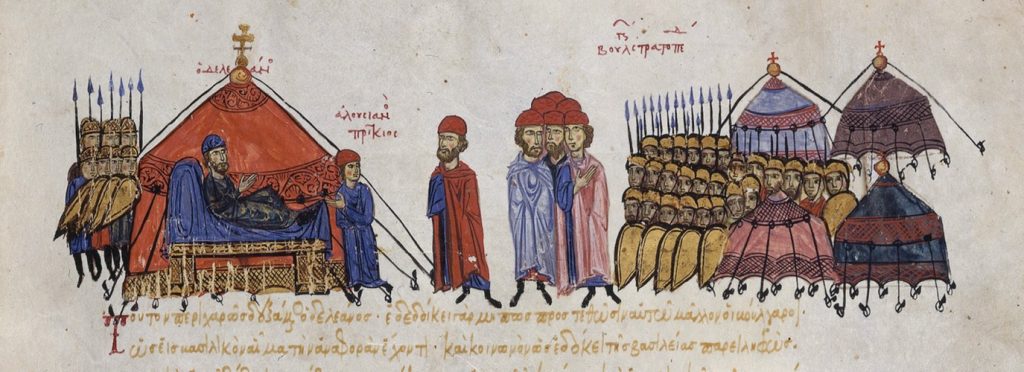
Former Bulgarian lands were staffed primarily with Roman officials (Stephenson 2004, 55, 74; Krsmanović 2008, 188). The rule of the Rus’ in 971 Bulgaria saw 300 Bulgarian boyars (nobility) killed (Stephenson 2004, 55). The remnant of the aristocracy had been deported after 1018, since they were seen as potential rebels, and were integrated into Roman administration – so one finds Aaron, the son of Ivan Vladislav, as a magistros and doux in contemporary Armenia (Seibt 2011, 57 f.; Oikonomides 1985, 24). His brother, Presian was a magistros too (Petkov 2008, 141). One also finds Bulgarian elite in Thessaly, Western Thrace, and Asia Minor (Charanis 1961 148f.; Božilov, Gjuzelev 1999, 344; Litavrin 1987, 198; Stephenson 2004, 77). Local Bulgarian element manifested itself in the rebellions like the one of a self-proclaimed grandson of Samuil, Peter II Delyan. In 1040 – 1041, he won support of Alusian, another (alleged) son of Ivan Vladislav, and made him co-ruler (Seibt 2011, 73; Stephenson 2004, 130; Threadgold 1997, 588f.; Popović 2016, 8f.; Curta 2006, 282–284; cf. Madgearu 2010, 24–26; see also Cheynet 1990), taking Skopje, Niš, Prespa, Dyrrachion and parts of northern Greece; Tihomir, a Bulgarian in Roman service who also supplied his troops to the rebels, was proclaimed tsar by the Bulgarian troops, only to be killed by Delyan; Delyan himself was killed by Alusian, who deflected back to the Romans and was given additional titles (Madgearu 2010, 24; Threadgold 1997, 588f.; Stephenson 131–133). Another rebellion wanting to restore the Bulgarian Empire was the one of Georgy Voyteh, in 1072, when he took Skopje, Nisos, Devol and Ochrid (Madgearu 2010, 21–23; Curta 2006, 289). He was helped by Constantine Bodin, son of the ruler of Zeta, who was crowned Bulgarian Tsar; the rebellion was crushed a year later (Stephenson 2004, 143; Popović 2016, 9f.). Although relying on regional history to gain support, the rebellions bore no ethnic character, but were rather power-struggles of local magnates (Stephenson 2004, 143f, 155).
In conclusion, the First Bulgarian Empire lost much of its power by the year 971. However, it is the year 1018 that is taken as an end of early medieval Bulgarian statehood since any form of renewal of the Bulgarian Empire or a larger organized resistance to the Roman (re)conquest of the territory once under Bulgarian rule was quenched with the defeat of the last Cometopuli. The Bulgarian elite had mostly been either killed by the previous wars, or was dispersed by the Roman Empire to different themes. The former Bulgarian lands became a part of the Roman thematic system, most probably organized first into a larger theme of Bulgaria. To make the administration of the theme easier, Bulgaria was divided into smaller themes, most notable of which is Paradounavon that served as a buffer zone between Danube, and the Roman territories south of the Balkan Mountains. However, the former Bulgarian territories were still a target for nomadic attacks from the north, where neither Roman diplomacy, nor the attempts at integration of the Pechenegs or other nomads had any significant impact. The incursions were only curbed by an intensive Roman military campaign at the beginning of the twelfth century, and later implementation of foreign elements as border surveillance. Bulgaria will have to wait until 1185 to regain its independence.
Bibliography:
Primary Sources:
Skylitzes, John. A Synopsis of History. 1126– 1150. (BNE MSS Graecus Vitr. 26-2 Codex Græcus Matritensis Ioannis Skyllitzes). Biblioteca Digital Hispánica / Biblioteca Nacional de España. http://bdh-rd.bne.es/viewer.vm?id=0000022766&page=1.
Secondary Literature:
Angold, Michael. 1997. The Byzantine Empire, 1025–1204. A Political History. London: Longman.
Божилов, Иван, Гюзелев, Васил. 1999. Том I: История на цредновековна България: VII–XIV век [Volume I: History of Medieval Bulgaria: VII–XIV Century]. Sofia: Anubis.
Božilov, Ivan. 2008. “L’administration byzantine en Bulgarie (1018–1186): le cas de Paristrion – Paradounavon (Paradounavis).” [The Byzantine Administration in Bulgaria (1018–1186): the case of Paristrion – Paradounavon (Paradounavis)]. In Byzantium and the Bulgarians (1018 – 1185), edited by Katerina Nikolaou, Kostas Tsiknakis. Athens: s.n.: 91–97.
Budak, Neven. 2018. Hrvatska povijest od 550. do 1100. Zagreb: Leykam international.
Charanis, Peter. 1961. “The Transfer of Population as a Policy in the Byzantine Empire.” Comparative Studies in Society and History 3/2: 140–154.
Cheynet, Jean-Claude. 1990. Pouvoir et contestations à Byzance (963–1210). [Power and Disputes in Byzantium]. Paris: Publications de la Sorbonne.
Curta, Florin. 2006. Southeastern Europe in the Middle Ages, 500–1250. Cambridge, New York: Cambridge University Press.
Curta, Florin. 2013. “The image and archaeology of the Pechenegs.” Banatica 23: 143–202.
Frankopan, Peter. 2001. “The workings of the Byzantine provincial administration in the 10th–12th centuries: the example of Preslav.” Byzantion 71/1: 73–97.
Golden, Peter. 1992. An Introduction to the History of the Turkic Peoples: Ethnogenesis and State-Formation in Medieval and Early Modern Eurasia and the Middle East. Wiesbaden: Otto Harrassowitz.
Holmes, Catherine. 2002. “Byzantium’s Eastern Frontier in the Tenth and Eleventh Centuries”. In Medieval Frontiers: Concepts and Practices, edited by David Abulafia, Nora Berend, 83–104. Aldershot: Ashgate Publishing.
Hussey, Joan M. 1950. “The Byzantine Empire in the Eleventh Century: Some Different Interpretations.” Transactions of the Royal Historical Society 32: 71–85.
Jordanov, Ivan. 2003. Corpus of Byzantine Seals from Bulgaria, Volume 1: Byzantine Seals with Geographical Names. Sofia: Agato Publishers.
Jordanov, Ivan. 2003a. “The Katepanate of Paradounavon According to the Sphragistic Data.” In Studies in Byzantine Sigillography 8, edited by Jean-Claude Cheynet, Claudia Sode. Munich: K.G. Saur: 63–74.
Klaić, Nada. 1975. Povijest Hrvata u ranom srednjem vijeku. Zagreb: Školska knjiga.
Krsmanović, Bojana. 2009. Das Problem der sogennanten zusammengesetzten Bezirke auf dem Balkan im 11. Jahrhundert – Zwei Fallbeispiele. [The Problem of the so-called Composite Districts in the Balkans in 11th century – Two Examples]. Зборник радова Византолошког института 46: 65–87.
Krsmanović, Bojana. 2008. The Byzantine Province in Change (on the Threshold between the 10th and the 11th Century). Belgrade, Athens: Institute for Byzantine Studies, Serbian Academy of Sciences and Arts ; Institute for Byzantine Research, National Hellenic Research Foundation.
Kühn, Hans-Joachim. 1991. Die byzantinische Armee im 10. und 11. Jahrhundert. Studien zur Organisation der Tagmata. [The Byzantine Army in 10th and 11th century: Studies on the Organisation of the Tagmata]. Vienna: Fassbaender.
Литаврин, Генадий. 1987. България – Византия (XI–XII век). [Litavrin, Genadiĭ. Bulgaria – Byzantium (XI–XII century)]. Translated by Aron Kisilenko. Sofia: Nauka i Izkustvo.
Madgearu, Alexandru. 1999. “The Military Organization of Paradunavon.” Byzantinoslavica 60(2): 421–446.
Madgearu, Alexandru. 2010. “Centrifugal Movements in the Balkans in the 11th Century.” In Association Internationale d’Études du Sud-Est Européen. Bulletin 35–39, 2005–2009. Bucarest: s.n.: 21–28.
Madgearu, Alexandru. 2013. Byzantine Military Organization on the Danube, 10th–12th Centuries. Leiden, Boston: Brill.
Madgearu, Alexandru. 2013a. “The Pechenegs in the Byzantine army.” In The Steppe Lands and the World beyond them. Studies in honor of Victor Spinei on his 70th birthday, edited by Florin Curta, Bogdan-Petru Maleon. Iași: Editura Universității “Alexandru Ioan Cuza”: 207–218.
Максимовић, Љъбомир. 1997. “Организација византијске власти у новоосвојеним областима после 1018. године. ” [“The Organisation of Byzantine Authority in Newly Conquered Regions after 1018”]. Зборник радова Византолошког института 36: 31–43.
Mărculeț, Vasile. 2011. “ “The archontate of the Paristrion cities” or “of the cities from the Istros” – a thema with a single name in the Byzantine literary sources.” Istros 17: 55–68.
Meško, Marek. 2013. “Pecheneg Groups in the Balkans (ca. 1053–1091) according to the Byzantine Sources.” In The Steppe Lands and the World beyond them. Studies in honor of Victor Spinei on his 70th birthday, edited by Florin Curta, Bogdan-Petru Maleon. Iași: Editura Universității “Alexandru Ioan Cuza”: 179–205.
Mihajlovski, Robert. 2016 “A Collection of Medieval Seals from the Fortress Kale in Skopje, excavated between 2007 and 2012.” Byzantion 86: 261–316.
Nesbitt, John William, Oikonomides, Nicolas. 1991. Catalogue of Byzantine seals at Dumbarton Oaks and in the Fogg Museum of Art, Vol. I. Italy, North of the Balkans, North of the Black Sea. Washington D.C.: Dumbarton Oaks Research Library and Collection.
Oikonomides, Nicolas. 1985. Byzantine Lead Seals. Washington, D.C.: Dumbarton Oaks.
Ostrogorsky, George. 1968. History of the Byzantine State. Translated by Joan Hussey. Oxford: Blackwell.
Petkov, Kiril. 2008. The Voices of Medieval Bulgaria, Seventh – Fifteenth Century: The Records of a Bygone Culture. Leiden, Boston: Brill.
Popović, Mihailo. “Der Balkan vom Ende des Ersten bulgarischen Reiches bis zum Beginn des Zweiten bulgarischen Reiches. Version 1.0”. [The Balkans from the End of the First Bulgarian Empire to the Beginning of the Second Bulgarian Empire. Version 1.0] In: Online-Handbuch zur Geschichte Südosteuropas. Volume 1: Herrschaft und Politik in Südosteuropa bis 1800, edited by Institut für Ost- und Südosteuropaforschung. Accessed June 24, 2016. http://www.hgsoe.ios-regensburg.de/themen/herrschaft-politik-und-staatlichkeit.html: 1–15.
Runciman, Stephen. 1930. A History of the First Bulgarian Empire. London: G. Bell & Sons.
Schmitt, Oliver. 2006. „Die Petschenegen auf dem Balkan von 1046 bis 1072.” [The Pechenegs in the Balkans from 1046 until 1072]. In Pontos Euxeinos. Beiträge zur Archäologie und Geschichte des Antiken Schwarzmeer – und Balkanraumes, edited by Sven Conrad et alii. Langenweißbach: Beier & Beran: 473–490.
Seibt, Werner. 1975. “Untersuchungen zur Vor- und Frühgeschichte der “bulgarischen” Kometopulen” [Studies on the Pre- and Early History of the “Bulgarian” Cometopuli]. Handes Amsorya 89: 65–100.
Seibt, Werner. 2011. Ein Blick in die byzantinische Gesellschaft: Die Bleisiegel im Museum August Kestner. [A Look into the Byzantine Society: the Seals in the August Kestner Museum]. Radhen: Vlg Marie Leidorf.
Spinei, Victor. 2003. The Great Migrations in the East and South East of Europe from the Ninth to the Thirteenth Century. Cluj-Napoca: Romanian Cultural Institute : Museum of Brăila Istros Pub. House.
Spinei, Victor. 2009. The Romanians and the Turkic Nomads North of the Danube Delta From the Tenth to the Mid-Thirteenth Century. Leiden, Boston: Brill.
Stephenson, Paul. 2004. Byzantium’s Balkan Frontier: A Political Study of the Northern Balkans, 900–1204. Cambridge: Cambridge University Press.
Strässle, Paul Meinrad. 2006. Krieg und Kriegführung in Byzanz: die Kriege Kaiser Basileios’ II gegen die Bulgaren (976-1019). Vienna, Cologne: Böhlau.
Threadgold, Warren. 1997. A History of the Byzantine State and Society. Stanford: Stanford Univeristy Press.
Wassiliou-Seibt, Alexandra-Kyriaki. 2013. “Παρατηρήσεις σχετικά µε την ίδρυση του θέµατος Παραδουνάβου και τους ανώτατους στρατιωτικούς διοκητές της.” [Observations on the Establishment of the Military Administrative unit Paradunabon and Commanders]. In Holokotinon. Studies in Byzantine Numismatics and Sigillography in Memory of Petros Protonotarios (Bibliotheca of the Hellenic Numismatic Society 10). Athens: s.n.: 181–195.
Wassiliou-Seibt, Alexandra-Kyriaki. 2017. “Das byzantinische Verteidigungssystem an der Balkangrenze (Ende 10. – Ende 11. Jh.). Neue Erkentnisse aus der systematischen Nachlese der narrativen Quellen und dem Siegelbefund. ” [The Byzantine Defence System on the Balkan Border (end of 10th–end of 11th century). New Insights from the Systematic Reading of the Narrative Sources and the Seal-Findings] Byzantinoslavica 75/1–2: 164–190.
Autor:
Recenzenti:
- Dominik Pešut, voditelj projekta, voditelj recenzijskog tima;
- Lucian Borić, član recenzijskog tima;
- Mihaela Marić, članica recenzijskog tima.
Ovaj esej objavljen je u Anno Domini Enciklopediji, dijelu međunarodnog projekta Anno Domini, na gromovnik.hr – mrežnoj stranici Udruge “Gromovnik”.